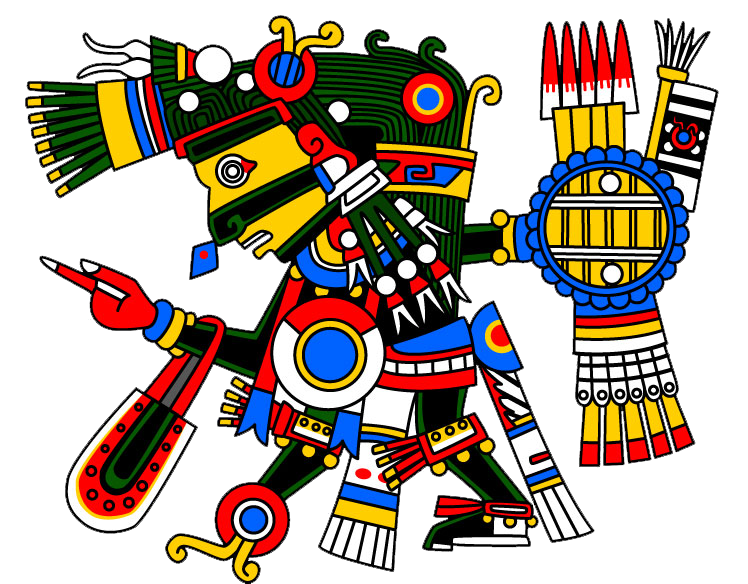
Tezcatlipoca, or 'One Leg'
NO. 1
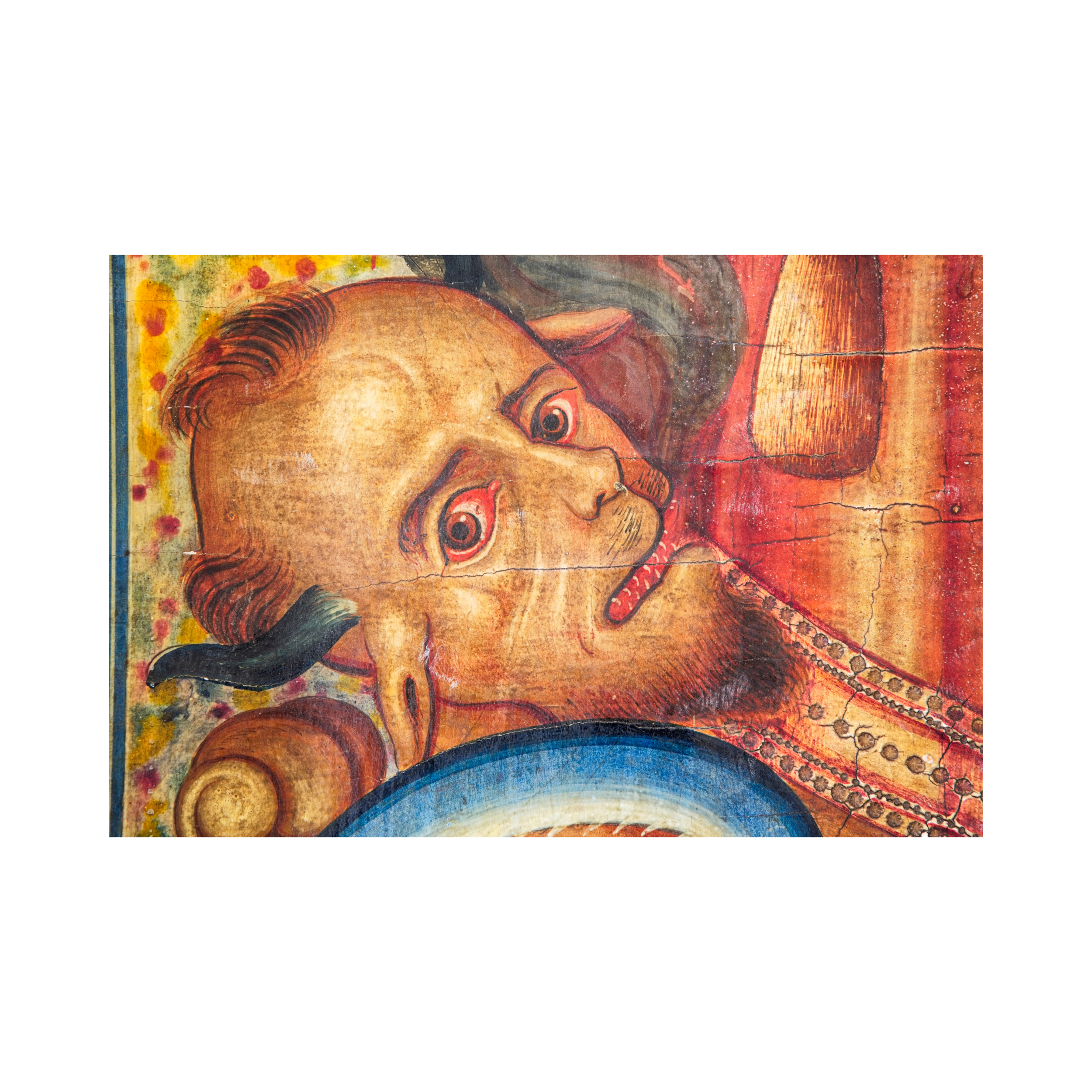
Tezcatlipoca is the god of the night sky, hurricanes, obsidian, conflict, and providence. When depicted, he usually wore a talisman with a disk worn as a chest pectoral. While depicted with black and yellow stripes painted across his face, he is usually shown with his left foot replaced with an obsidian mirror, bone, or snake, as it was lost to the sea monster Cipactli in the mythos. In the Aztec religion, he was the central deity. In Aztec or Mesoamerican folklore, he and other gods could shapeshift, and he was no different as his counterpart was the illusive but powerful jaguar, which is why he is known as the jaguar god.

NO. 2
This figure is extremely popular, worshipped by the Mayan and Olmec communities. His name in the Mesoamerican language means ‘Smoking Mirror.’ This deity has numerous epithet’s which allude to different characteristics, like Ipalnemoani ("He by Whom We Live"), and Necoc Yaotl ("Enemy of Both Sides"), and Tioque Nahuaque (‘Lord of the Near and the Night’), etc. His power to omnipresence was more a connection that extended far beyond obsidian, since ritual bloodletting and human sacrifice was conducted with obsidian. Apart from being a creator god, he was also a trickster and ruled over the modern Aztec pantheon.
NO. 3
Tezcatlipoca, according to Aztec mythology, was born to the primordial creator deities Ometecuhtli and Omecihuatl, and had four siblings; one of whom, Quetzalcoatl, the god of the wind, patron of priests, and inventor of calendars and books; he was known as the Serpent Feathered god. The brothers feuded as much as they worked together, working towards the same goal but sometimes in opposition towards each other. After being born, this deity spent over 600 years for his youngest brother Huitzilopochtli to grow flesh before Tezcatlipoca and Quetzalcoatl, together, made the world. Before the world was made, the only thing that was technically alive were a few gods, a massive ocean and the sea monster, Cipactli, which Tezcatlipoca successfully lured away and killed by using his foot as bait. Both brothers were able to create the world on the sea monster’s body.
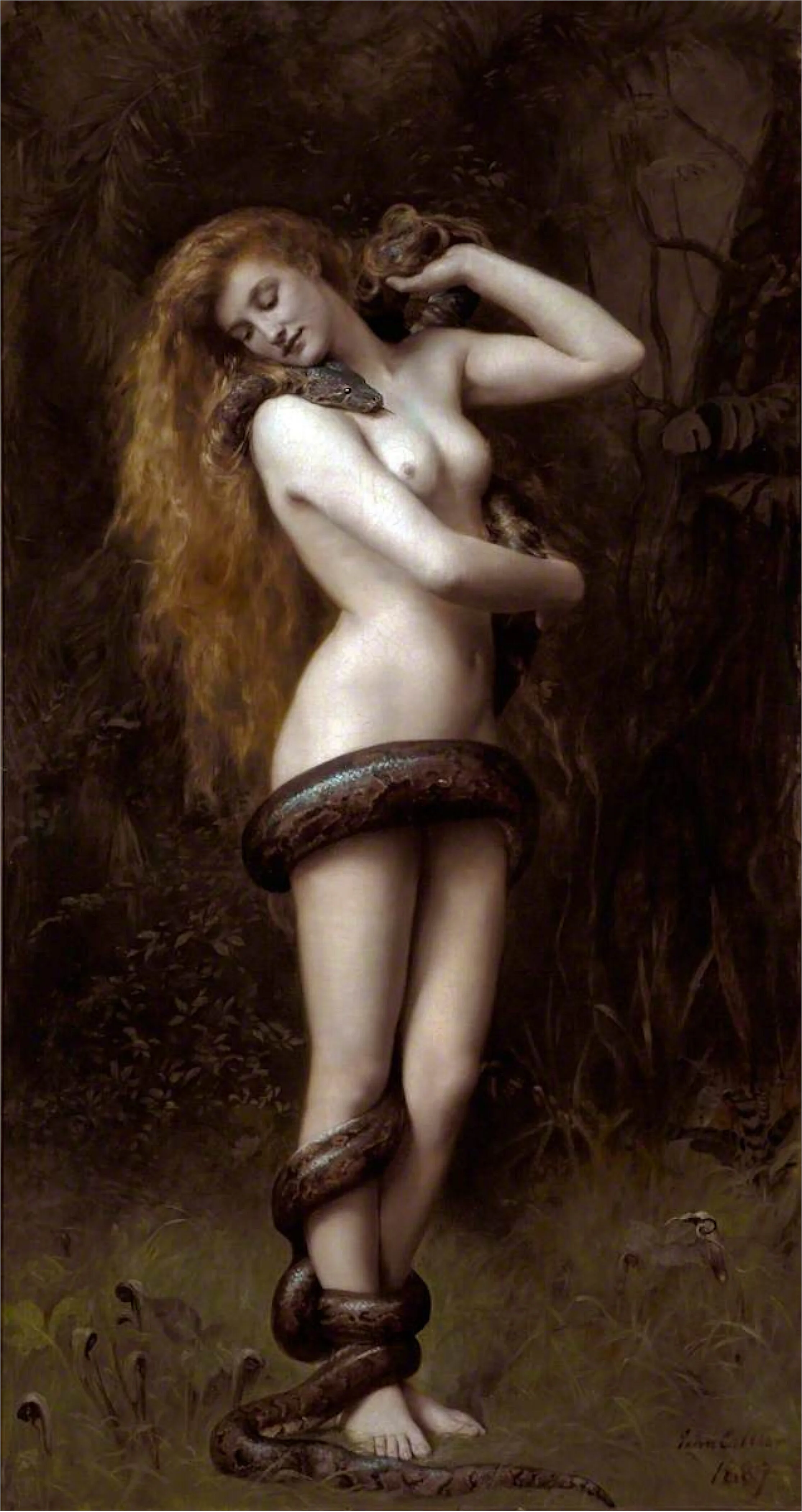
The tale of Lilith
There are a lot of accounts about the ‘demon-ness Lilith’, and her origin story leads a lot to be desired. Apparently, she was the first wife of Adam in Sumerian folklore, and because she did not want to be under Adam’s control any longer, and became, depending on which account you read, a vampire, a demon-ess, or a harlot, or all three, for not wanting to be apart of ‘God’s plan.’ The Sumerian accounts, taken from the 3rd millennium, were the first accounts of what happened to her before the biblical Hebrews surmised of her.
She is described as a ‘beautiful maiden’ but was believed to be a harlot, who once took a lover, offered no satisfaction to him, nor would she ever let him go. According to the Sumerian epic, dating from around 2000 B.C, ‘Gilgamesh and the Huluppu Tree’ and was ‘‘believed to appear to have human eyes. She is slender, well-shaped, beautiful, and nude, with wings, and owl feet. She stands erect on two reclining lions which are turned away from each other and are flanked by owls. On her head, she wears a cap embellished by several pairs of horns. In her hand, she holds a ring-and-rod combination. Evidently, this is no longer a lowly she-demon, but a goddess who tames wild beasts, and as shown by the owls on the reliefs, rules by night.’’
Apparently, the earliest mention of the ‘she-demon, whose name is similar to that of Lilith is found in the Sumerian king list which dates from around 2400 B.C. ‘‘It states, that the father of the great Gilgamesh was a Lilu-demon. The Lilu was one of four demons belonging to an incubi-succubae class. The other three were Lilitu (Lilith), a she-demon; Ardat Lili, or her handmaiden, who visited men in the night and bore them ghostly children. There is also the tale of the Irdu Lili, who was her male counterpart and would visit women and beget children by them. Originally these were storm demons, but because of a mistaken etymology, they came to be regarded as night demons. On one brief reference to Lilith in the Bible, Isaiah 34:14, in describing Yahweh’s (God) day of vengeance, says: The wild cat shall meet with the jackals, And the satyr shall cry to to his fellow, Yea, Lilith shall repose there, And find her a place of rest.’’