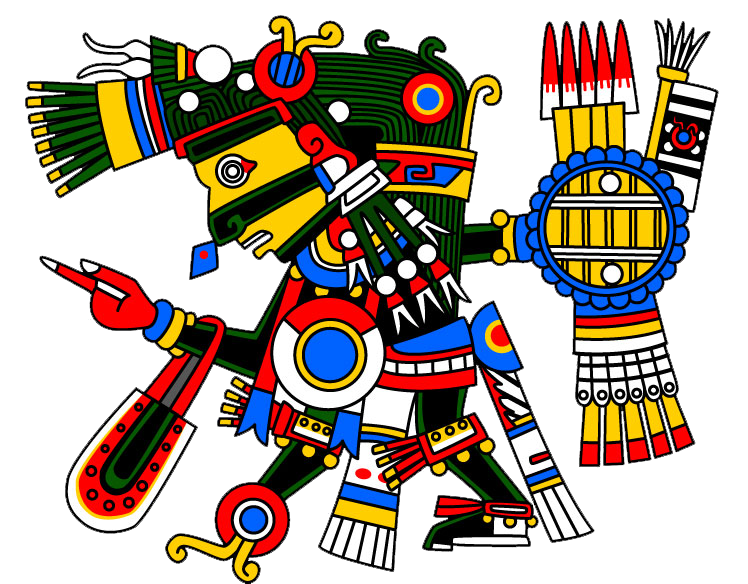
Tezcatlipoca, or 'One Leg'
NO. 1
Tezcatlipoca is the god of the night sky, hurricanes, obsidian, conflict, and providence. When depicted, he usually wore a talisman with a disk worn as a chest pectoral. While depicted with black and yellow stripes painted across his face, he is usually shown with his left foot replaced with an obsidian mirror, bone, or snake, as it was lost to the sea monster Cipactli in the mythos. In the Aztec religion, he was the central deity. In Aztec or Mesoamerican folklore, he and other gods could shapeshift, and he was no different as his counterpart was the illusive but powerful jaguar, which is why he is known as the jaguar god.

NO. 2
This figure is extremely popular, worshipped by the Mayan and Olmec communities. His name in the Mesoamerican language means ‘Smoking Mirror.’ This deity has numerous epithet’s which allude to different characteristics, like Ipalnemoani ("He by Whom We Live"), and Necoc Yaotl ("Enemy of Both Sides"), and Tioque Nahuaque (‘Lord of the Near and the Night’), etc. His power to omnipresence was more a connection that extended far beyond obsidian, since ritual bloodletting and human sacrifice was conducted with obsidian. Apart from being a creator god, he was also a trickster and ruled over the modern Aztec pantheon.
NO. 3
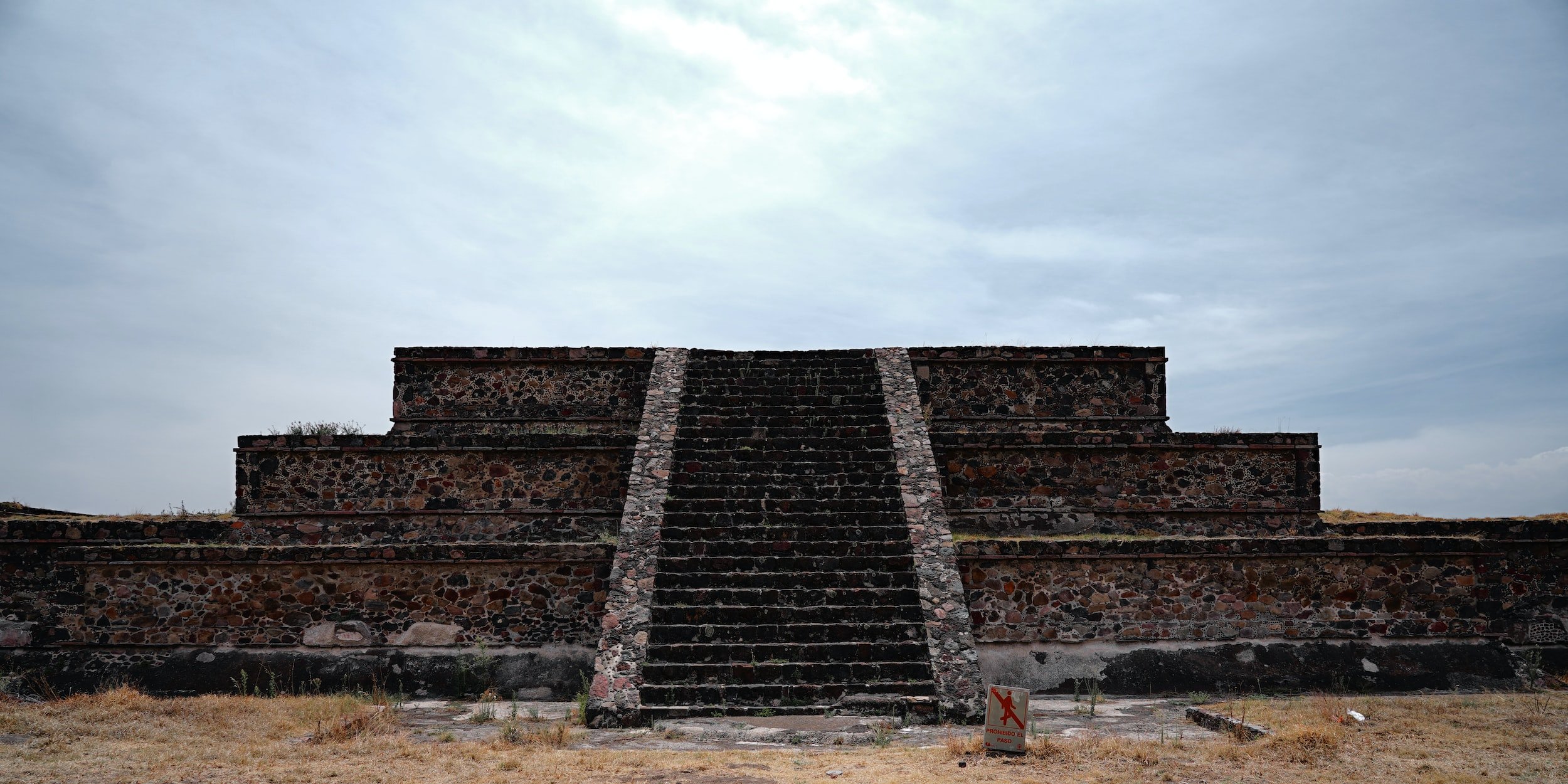
Tezcatlipoca, according to Aztec mythology, was born to the primordial creator deities Ometecuhtli and Omecihuatl, and had four siblings; one of whom, Quetzalcoatl, the god of the wind, patron of priests, and inventor of calendars and books; he was known as the Serpent Feathered god. The brothers feuded as much as they worked together, working towards the same goal but sometimes in opposition towards each other. After being born, this deity spent over 600 years for his youngest brother Huitzilopochtli to grow flesh before Tezcatlipoca and Quetzalcoatl, together, made the world. Before the world was made, the only thing that was technically alive were a few gods, a massive ocean and the sea monster, Cipactli, which Tezcatlipoca successfully lured away and killed by using his foot as bait. Both brothers were able to create the world on the sea monster’s body.

The tale of the Kuchisake-onna
The tale of the Kuchisake-onna dates back to the 17th to 19th century in Japan and is described as a woman mutilated, with her mouth split from ear to ear. The tale has various origins, claiming that she either was the adulterous wife or mistress of a great samurai that he became so outraged at hearing his wife was unfaithful that he slashed his wife’s mouth from ear to ear as punishment. Other tales claimed that she was once a great beauty and a jealous woman cut her; or that she had a dental procedure gone wrong. Either way, she died of the blood loss, and she came back as a malevolent spirit who appears to you and asks, ‘Am I pretty?’ Or, ‘Am I beautiful.’
She appears on a usually foggy night to a stranger, according to Kuchisake-Onna | Creepypasta Wiki | Fandom, haunting different places, wearing a mask that hides her face. She will stop a person and ask you directly, ‘‘Do you think I’m beautiful?’’ The person will usually answer, ‘‘Yes,’’ causing her to lower the mask to show off the hideous bloodied scars and ask, ‘‘What about now?’’ If you say no, scissors will appear in her hand, and she will slash you to death. If you still say yes, she will give you the same markings that show on her face, leaving you with the same fate. ‘‘There are several ways to prevent this terrible fate. One, to confuse Kuchisake-Onna by saying: "You are average." Two, present her with hard amber candy, which she'll take much delight in and let you go. Three, say ‘Pomade’ six times, and she will flee. Four, ask her if you are beautiful, which will confuse her hopefully long enough to escape. But be wary. She is said to be incredibly fast and will be unlikely to stop.‘‘
So if you see a strange woman on the street wearing a mask to stop you and ask the words, ‘Am I pretty/Do you think I’m beautiful?’’ I suggest that you adopt an NYC attitude (I can say this, I am from New York) and drop some candies before walking or sprinting away!
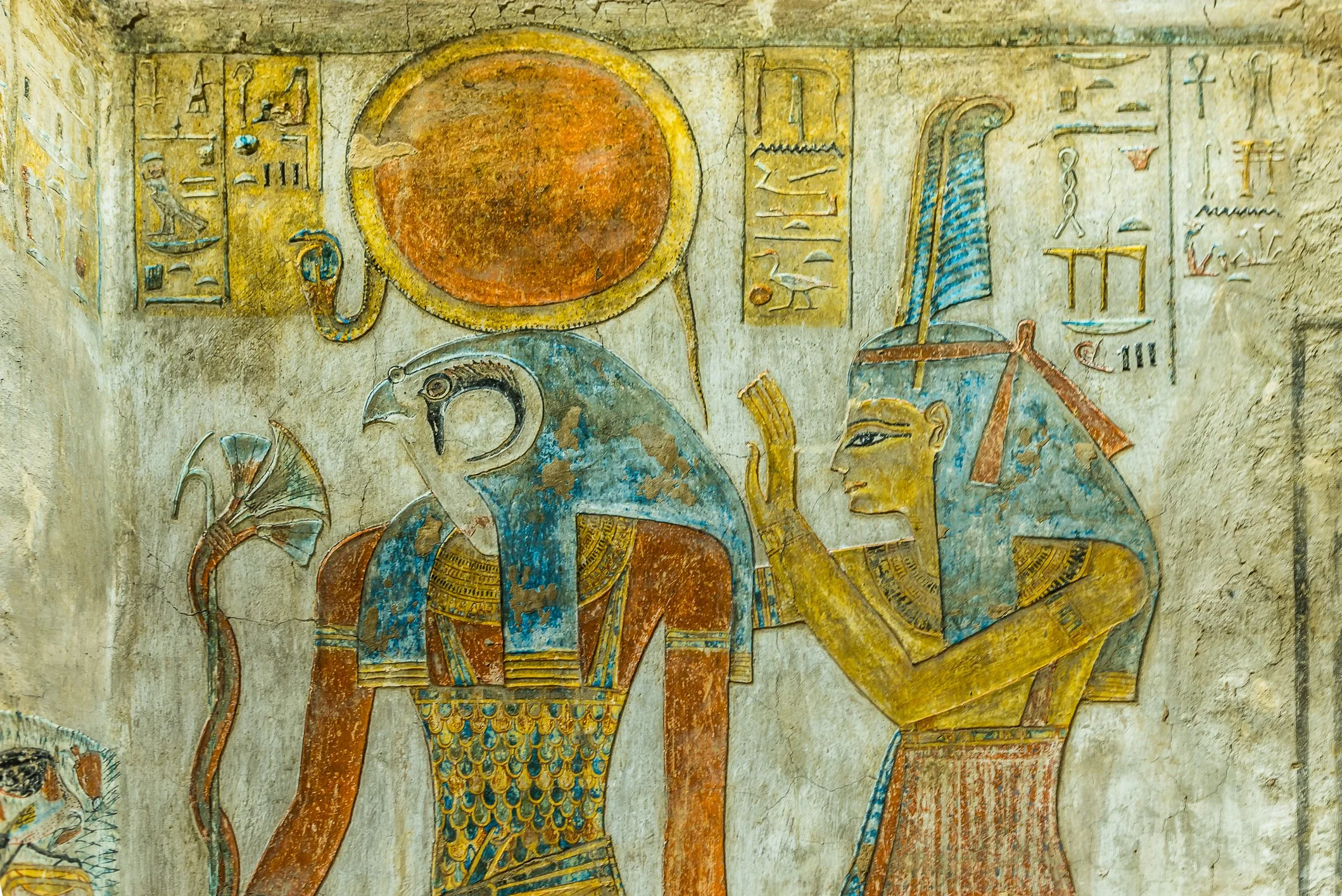
Ra, the Sun Deity
There are many versions of Ra. ‘Ra’ is the Egyptian word for the sun, and since we are talking of the Egyptian pantheon of gods, he was the oldest of them all and later merged with others such as Horus, becoming Ra-Horakhty (the morning sun), Amun (as noonday sun), and Atum (the evening sun) associated with primal life-giving energy. As a solar deity, he was the sun riding in his ship during the day and descending into the underworld come night.
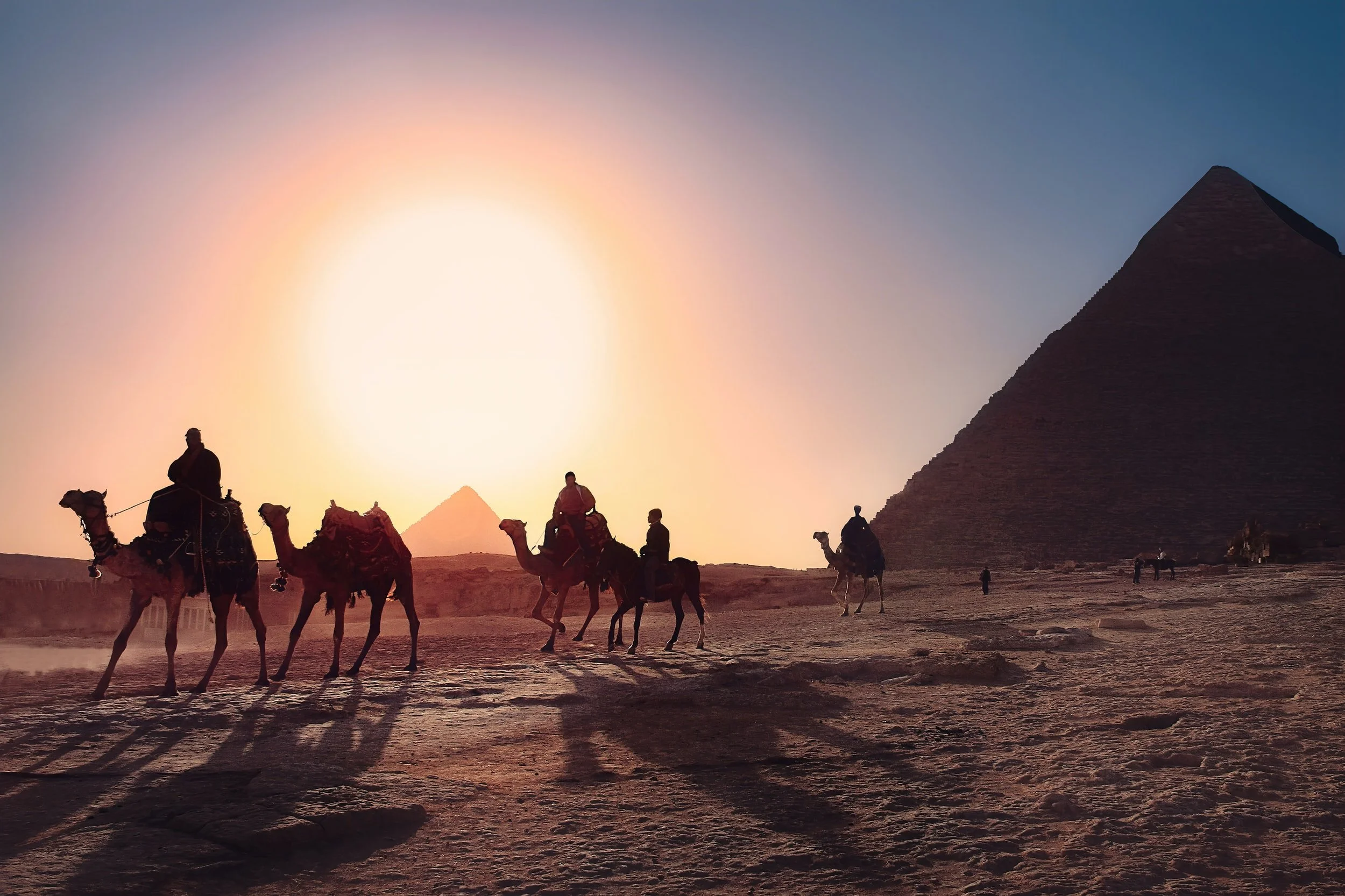
In Egyptian mythology, it is said he battles the giant serpent Apophis every time he goes to the underworld to start the end of the world and prevent the sun from ever-rising and destroying life on Earth forever. Ra was the most important god of Egypt and the most popular one, as he emphasized 'life-giving/bearing.' Worship of Ra was established in the Old Kingdom with the development of funerary rituals dedicated to the god. His image appeared on all royal monuments since the First Dynasty. Later emperors adopted the name “Ramses” as a religious title after the king's grandfather, who was also known as Ramesses I.
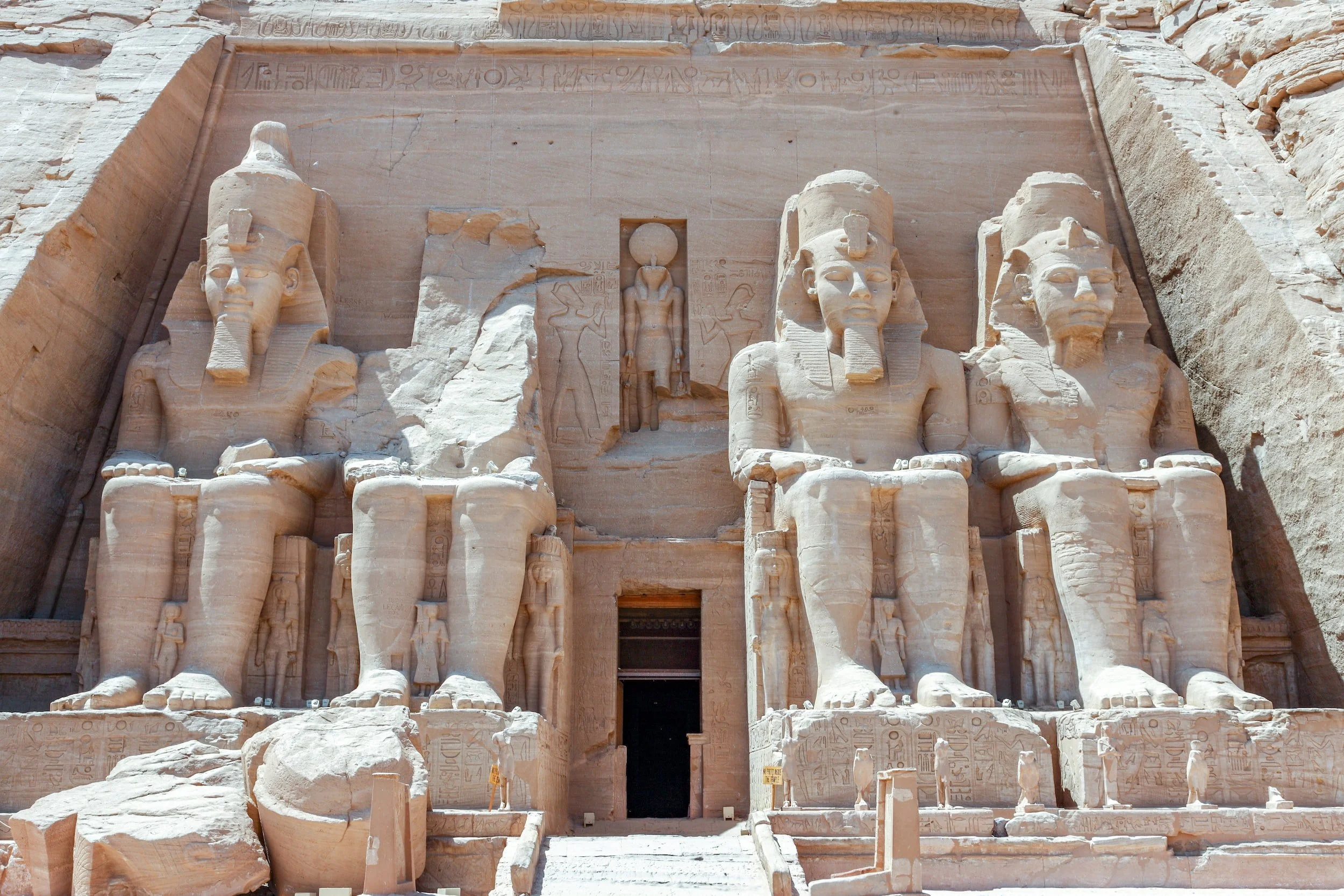
The most famous representations of Ra are is found on the Narmer Palette, a ‘‘hieroglyph of King Menes, which established Egypt’s first state religion around 3100 BC. The earliest known depiction of the god appears on one of the oldest surviving mummy masks, dating to the Middle Kingdom. This mask portrays the King wearing the headdress and chest ornaments that were worn by high priests of the temple of Ra during the Middle Kingdom period. Over time, the ram’s head symbol of Ra became widespread in Egypt, including appearing on the King’s banners and on temples as well as royal palaces.’’
Ra is a solar deity that is associated with light and rebirth. Throughout the history of mankind, the Sun has been considered the source of life for humanity, and therefore it has been used as a symbol by many religions to signify divinity. The Sun is associated with Ra because it is at his temple that the rays of sunlight would be most intense, shining on the statue of the god as if inviting him to shine on mankind. The ancient Egyptians believed that their civilization was founded by the gods of the sun. They associated the rising Sun with life and creation and used it to represent the passage of time – between each day and each month, the Egyptians measured the passing of time by counting the hours and minutes until the rising of the Sun again.

The tricksters
Those characters are always up to mischief. It’s not necessarily a bad thing, of course. Sometimes you need to start trouble in order to inspire change. Those who carry the title of ‘the trickster’ are usually seen in a bad light because of their actions, which if you read some of the myths about these archetypes, can sometimes be nefarious at best, but they usually teach social, ethical, and political values through puzzles, games, or twists of fate. A trickster can be an animal, spirit, or sometimes a god.
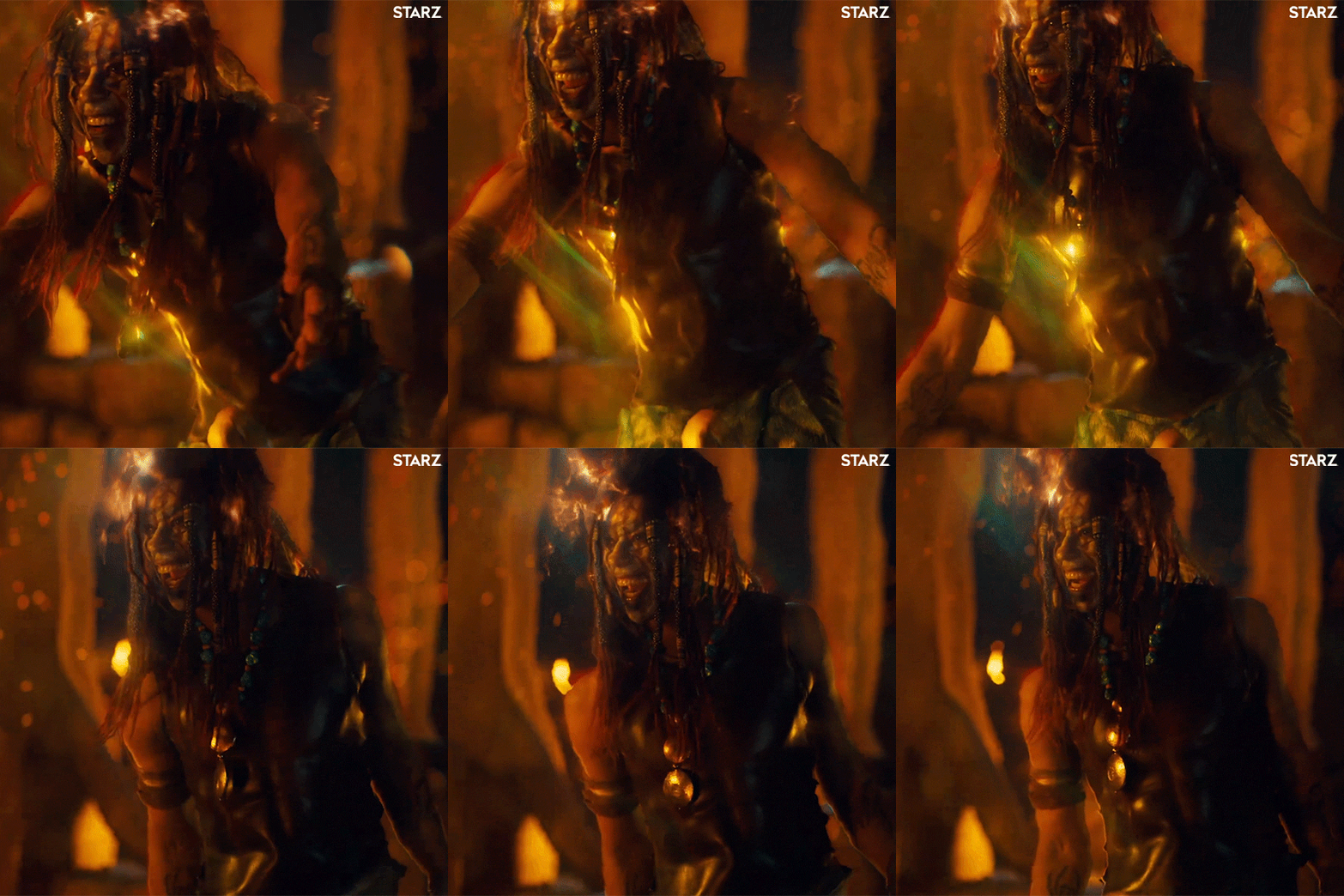

This particular trickster, which is very popular with the show American Gods on Starz, is the god Anansi, generally referred to as the god of stories of West African mythology. My favorite myth is how he got that title. The story goes as follows, Anansi the spider threw a web up into the sky, to confront the sky god Nyame, asking him to share all the stories of the world. So Nyame gives Anansi a challenge: If Anansi could bring to Nyame’s court Python the snake, Cheetah the fanged, the nests full of Hornets, and the fairy Mmoatia, then Anansi can have the box of stories. So Anansi agrees to this deal, thinking up new and clever ways to get the creatures to the sky court over the next four days. With the help of his wife Aso, and his son Ntikuma, Anansi goes into the forest to look for Python, and, waving a big stick in the air proclaimed that the stick was much longer than the Python. The Python slithered from the branch over their head, slithered down and stretched it’s long body alongside it, so that Anansi could easily wrap his strongest web around the thrashing web, then turned the big snake over to the sky god. Next, was the capture of the Cheetah. Appeasing to it’s ego, Anansi got a basket and claimed that the Cheetah was too small for it, but the Cheetah, undeterred, tried it on for size. Anansi quickly tied the bag around him, and dropped it off at the sky court, going after the hornets next. To catch the hornets, Anansi and his son go back into the forest, and carrying two big jugs of water, a empty gourd, and rope, they find the hornets nest, where very quietly they lift up both buckets and dump the water into the nest. The hornets, aggravated, came swarming out which brings Anansi to hold open the gourd, which he then sealed over and sent again to the sky court.
The final task that plagued Anansi was how to trick Mmotia, who was magic, into the sky court. His wife Aso had them both carve a wooden doll, and cover it in thick layer of sap from the nearby gum tree. Then they put the doll in a nice clearing and waited a long time. Then, they heard Mmotia scream at the doll because she thinks the doll is another fairy. Because it’s a doll, and is unresponsive, Mmoatia smacks it, claiming the doll’s rudeness. The doll’s sap causes Mmoatia’s hand to get stuck, and soon enough Anansi can bring a stuck Mmoatia to the sky court, winning the box of stories from a displeased Nyame, who didn’t believe he would win, and took it back to Earth. There goes the story of Anansi and the Box of Stories.