The Black Women Movements
NO.1
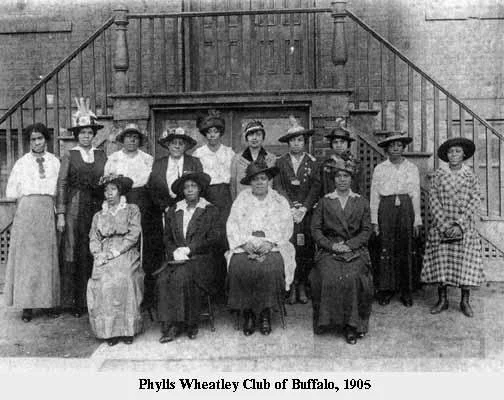
Many movements came out after the Emancipation (freeing of the slaves) Proclamation, and even though some were hand-chosen, they were mostly male-oriented. In contrast, women’s movements were pushed aside and forgotten. The Black Women’s National Club Movement was the first woman movement set in the 1890s, where their primary concern was for family and the community. They desired freedom by centering family values, unity, and the dynamic relationship between black women and men. ‘’Black women organized, throughout the nineteenth century, at first on a local, later on, a state and national level, to undertake educational, philanthropic and welfare activities. Urbanization, the urgent needs of the poor in rapid industrialization, and a sizeable group of educated women with leisure led to the emergence of a national club movement of white women after the Civil War. Similar conditions did not begin to operate in the black communities until the 1890s when local clubs in several different cities began almost simultaneously to form federations.’’

Other movements, like the National Federal of African American women started in 1895, where their concerns were resistance to slavery, black women’s concern for education, the lynching of children, men and women, sexual abuse from white men, healthcare, childcare for orphans, care for the elderly, job training for the youth and various but broad subject for social justice.
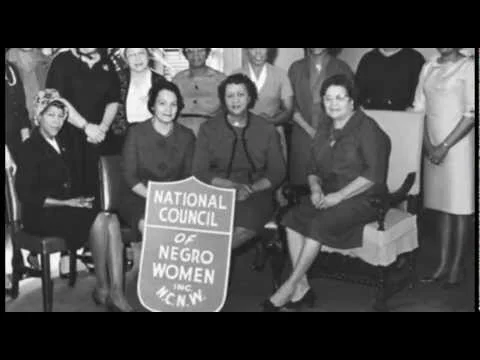
The National Council of Negro Women was another important movement, ‘’ founded and organized in 1935 by the late Dr. Mary McLeod Bethune for the purpose of planning and directing Negro women to greater economic, social, educational and cultural development in local communities and on the national and international levels. The aspects of the national program are therefore varied and include departments which deal specifically with citizenship education, human relations, international relations, education, labor and industry, archives and museums, public relations, religious education and fellowship, social welfare and youth conservation. The National Program Committee feels that conferences may be used effectively as a technique to synthesize the activities of these various departments.’’
NO. 2
Most of these movements were discarded and disbanded because of the lack of support from black men and the racism they were also receiving from white women and men alike. The attitudes of sexism and racism go hand in hand, and as we progress through the centuries, a study comes out of that: Black Women’s Studies. ‘’Black Women’s Studies emerged in part because of the failure of Black and Women’s Studies to address adequately the unique experiences of black women in America and throughout the world. Attempts to celebrate the existence of distinct black female literary tradition in America, which can be traced further back in time, also fall under the rubric of Black Women’s Studies because they acknowledge the politics of sex as well as the politics of race in the texts of black women writers. This celebration has taken place in two phases. The first phase is characterized by efforts to document that such a tradition exists.’’
NO. 3
Education is power, and knowledge of our past and present can only help us persevere to our future, which has been denied since slavery. ‘’Education has persisted as one of the most consistent themes in black Americans' life, thought, struggle, and protests. It has been viewed as a major avenue for acquiring first-class citizenship. There is a large body of research that takes into account the educational experiences of Afro-Americans. Black female educators such as Mary McLeod Bethune, Charlotte Hawkins Brown, Lucy Laney, Fanny Jackson Coppin, and Nannie Helen Burroughs are mentioned in some Afro-American history sources and, in some instances, are receiving attention in theses and dissertations. While this publication documents ‘the historical significance of black female educators in twentieth-century America, beyond the role of teacher, it is important that we establish to some extent a historical context for understanding the very basic struggle in which black women have been engaged to acquire an education and to utilize that education as a professional.’’
NO. 4
The main statement discussed repeatedly in Black Women studies is centered around race, class, gender, and sexuality, which all have an important part to play while surviving in America. That is why it is so important to discuss such serious topics with like-minded individuals, those who yearn for the freedom and privileges that other citizens have because even though we have our freedom, oppression is still prevalent. Around the world, women of every origin face the same problems. ‘’ The history of women’s movements in the Middle East has recently received much attention. Studies have been devoted to the advent of these movements, their development, activities, politics, organizing style, and central figures. Preliminary attempts at comparative analysis of these women’s movements have also been made. In 1999, Ellen Fleischmann published a comparative article entitled, ‘The Other ‘Awakening’: The Emergence of Women’s Movements in the Modern Middle East, 1900-1940’. In this first stage, ‘The Awakening’, women and men began to raise the issue of women’s status and to question related social practices. This stage is also typified by the emergence of varied women’s organizations and by women’s efforts to enhance girls’ education. In the second stage, ‘‘Women and Nationalism’, women adopted nationalism as a liberating discourse linking their involvement in nationalist movements with women’s emancipation. The third stage, designated ‘State Feminism’, is characterized by ‘women’s co-optation by, and collusion and/or collision with, the state-building project, resulting in the evolution of state feminism.’’ In conclusion, women deserve to get attention for their efforts to change society just as much as anybody else who has felt the sting of oppression, no matter what their gender. Race, sex, class, and gender all define who we are in society, and it is without the benefits of education given to all people no matter where they come from, are we truly lost.