Intro
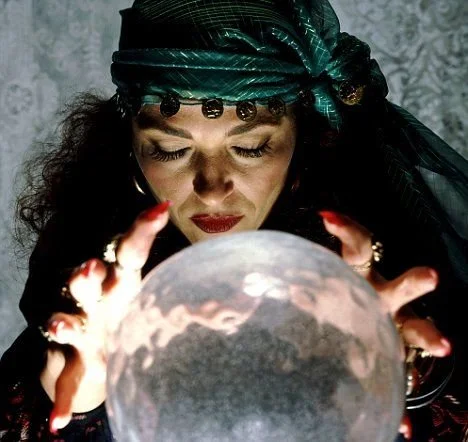
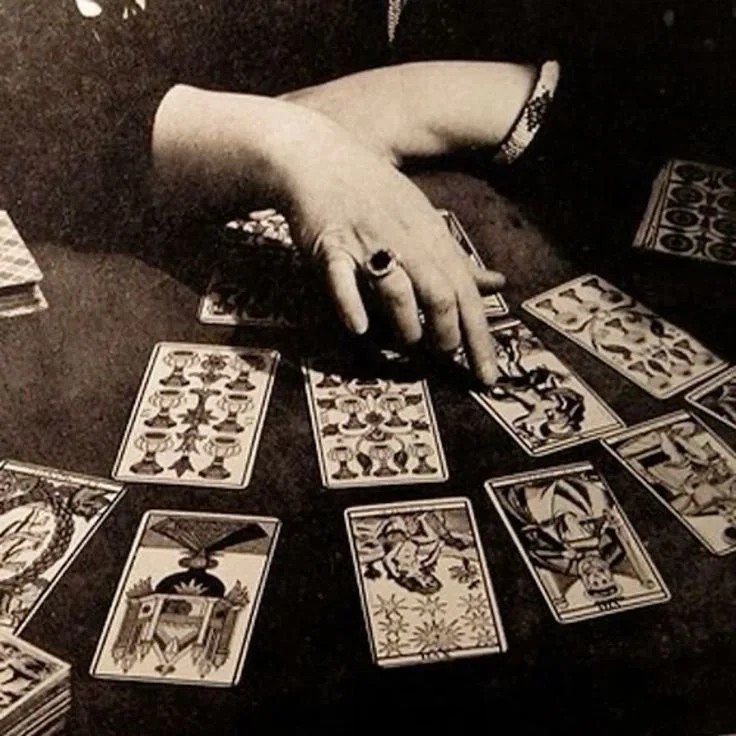
Since the late 60s, interest in magic and the occult have exploded in Western societies, thanks to mass media. Ouija boards, tarot cards, astrology, mysticism, spiritualism, and more, were all the range. Not to mention, the idea of paranormal hauntings. Occult beliefs are sometimes, irrational at best and absurd at others. ‘Spoon-bending’, ‘psychic-healing’, and, ‘biorhythms’ are just some of the interesting paganistic practices that enriched the public. Celebrities in the 80s and 90s were seen on talk shows and ‘informercials’ endorsing their favorite psychics. Politicians weren’t exempt, as even President Regan and the First Lady used astrologers to assist them in making decisions! Bill and Hilary Clinton used psychics and New Age gurus for counsel. Interestingly, while this wasn’t intended to influence the public, it was to show a sort of acceptance of paranormal solutions for life’s problems. No. Seriously. So, even though Halloween has passed, we'll be delving into the history of Psychics, Mysticism, and the Occult.
History of Spiritualism & “the Medium”
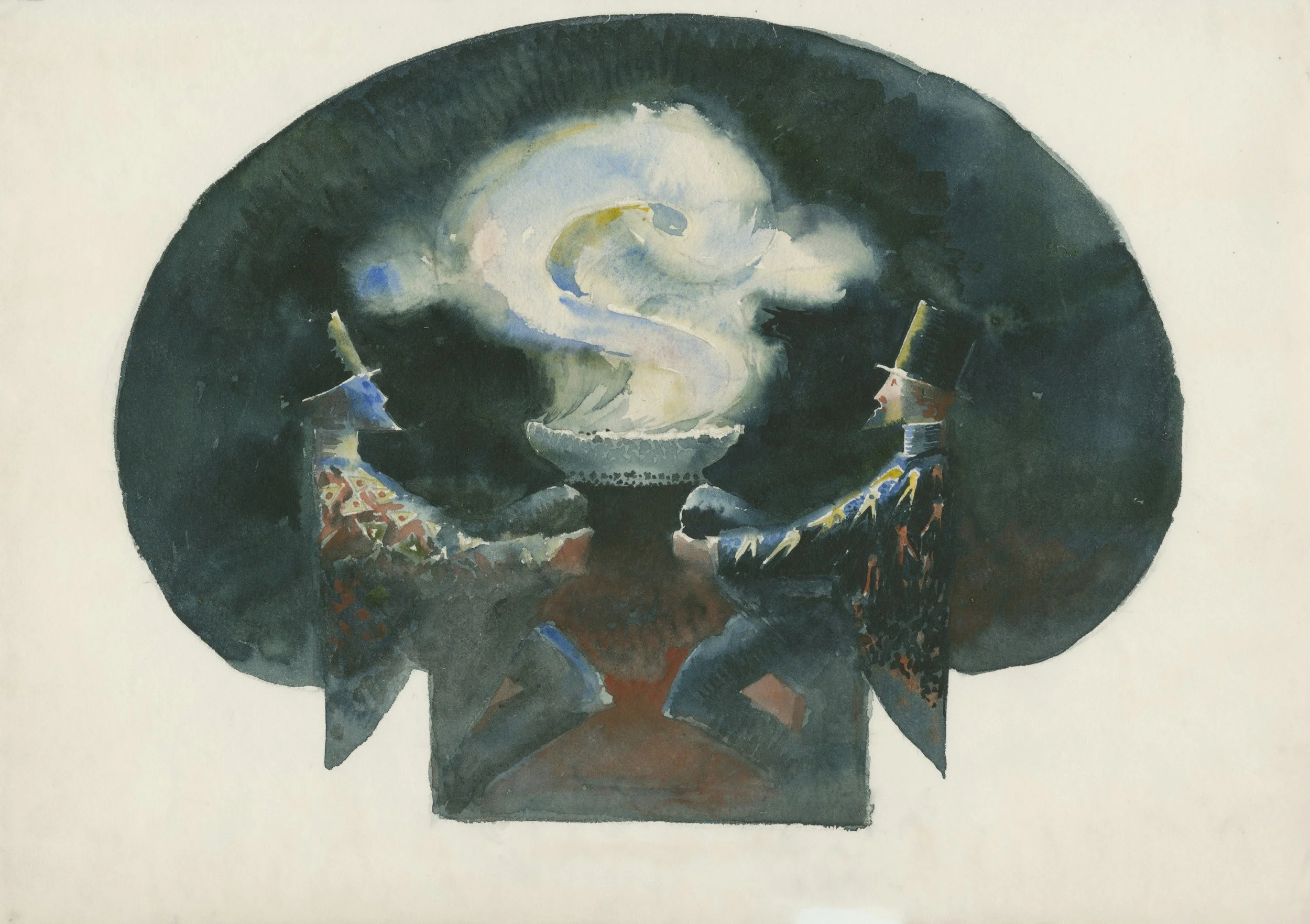
When did 'spiritualism' and belief in the occult even occur? Well, here in nineteenth century America, of course. The new religious movement of spiritualism was as much a matter of faith and the remnants of religious doctrine than realism, but with an exciting twist: Early scientists who paved the way for this to occur. Emanualis Swedenborg, a Swedish polymath, scientist, and inventor, was best known for his work on the afterlife, De Caelo et etjus Mirabilibus et de Inferno, or commonly referred to as the Heaven and It's Wonders and Hell from things Heard and Seen, completed in 1758. A deeply religious man who claimed to already be recieving dreams and visions from Christ, his experiences culminated a 'spiritual awakening'; the book is about the human soul, and laying out how we could either gravitate to either ascending to Heaven, or damning themselves to Hell by the choices that we make in life, and reckon with that fact. We are the judges of our souls, with either destination being a spiritual decision. Swedonborg also claimed to be in contact with the spirits of the dead, but personally warned against trying to make contact. Interesting. There was German astronomer and physician Franz Mesmer, who coined the term 'animal magnestism', which is described as the existence of a process of natural energy transference occuring between all animate and inanimate objects.' Using animal magnetism to cure a wide net of diseases from blindness to mental diseases, his theory attracted a massive following in 1750, especially from the wealthy citizens in Vienna and Paris during that time. Where we get the phrase 'mesesmerism' [from his last na,e] he is also responsible for modern-day hypnotism. Brittinanca covers him, "According to Mesmer, “animal magnetism” could be activated by any magnetized object and manipulated by any trained person. Disease was the result of “obstacles” in the fluid’s flow through the body, and these obstacles could be broken by “crises” (trance states often ending in delirium or convulsions) in order to restore the harmony of personal fluid flow. Mesmer devised various therapeutic treatments to achieve harmonious fluid flow, and in many of these treatments he was a forceful and rather dramatic personal participant."
Then, the record account of both men and women who would 'contact the dead for a fee', in Jacksonian America was a boom. Referencing The Spiritualist Medium: A Study of Female Professionalism in Victorian America by R. Laurence Moore, "Mediumship became a professional role identified primarily with women, even though many of the practitioners of the mediums' art were men. One census of spirit mediums which was conducted in 1859 showed a fairly even balance between the sexes—121 women as against 110 men.6 The men even accounted for some of the most famous of the nineteenth-century spirit communicators. For example, no female medium in Victorian America ever quite captured the attention accorded over many years to Daniel Dunglas Home. Home's admirers in a dozen countries claimed not only that he put his sitters in contact with the dead, but also that he levitated his own body and floated horizontally above their heads. In his most celebrated exhibition he reportedly floated out of a window seventy feet above a London street and came in through another window seven and a half feet away. Despite Home, however, and despite other men allegedly adept at invoking spirits, the popular impression persisted that mediumship was female." Women had become the 'stereotype' when you think of spiritualism and the occult. That of the powerful sorceress with powerful abilities that rival that of the greatest sorcerer known to Man, King Solomon.
It makes sense that women and girls were the heart of spiritualism. Women, who historically were used for domestic labor, weren’t legally and societally weren’t allowed to do anything but be obedient to their fathers, husbands and men. Prior to 1841, ‘seen and not heard’, and could not be educated in anything other than religious tomes, and even then were not allowed to weigh in religious matters. Only to listen, interpret and perceive these teachings.
Religious Beliefs
These ‘magical gifts’ didn't just spin out of thin air. Technically, they’re from the Bible. Prophecy, psychic visions, clairvoyance, spellcasting, the ability to heal the sick and diseased, were all laid out by biblical figures such as Enoch, Methuselah, Noah, David, Solomon, Joseph, John, Jesus, Paul, etc. If these figures could claim prophetic visions from God, why not Victorian figures and everyday laymen? Then, there’s Egypt. It’s not fair to blame a whole country on this, but England has been obsessed with Ancient Egypt since the awareness of mummies, hieroglyphics and the Great Pyramids of Giza. Especially with the idea of ‘dream interpreters’: a class of men who undertook to explain what dreams were. "The well- known episode in the Bible’s Book of Genesis in which Joseph predicts the future by interpreting the dreams of the Egyptian pharaoh (and others) was enormously significant in entrenching these long- standing associations not just in Christian culture but across the Abrahamic religions. While elsewhere in the Bible Egypt was depicted as a mysterious country, whose wise men boasted oracular abilities rivalling those of divine origin, Joseph’s remarkable mind powers, in contrast, were temporarily bestowed upon him by God, facilitating his rapid rise to power in Egypt.2 These God- given gifts saw Joseph surpass even the mystical might of ‘all the magicians of Egypt, and all the wise men thereof’ who cannot interpret Pharaoh’s dreams in Genesis." From the Victorian Alchemy (Science, magic and ancient Egypt) by Eleanor Dobson.
Like it was previously stated, interest in the paranormal and the 'occult' had revitalized back in the 60's, but seen in a more playful nature than an actual religious movement. Ideas of spiritualism and holiness of the soul traces back to the Quaker Movement. Quakers "believe that every person can experience the direct guidance of the Holy Spirit without outward rites or an ordained ministry. They are known for silent worship, decision-making by consensus, and a long tradition of actively working for peace and opposing war." The Quakers still follow this belief system, and were extremely active in other historical movements i.e. the Abolition of Slavery, Women's Rights Movements, the Civil Rights Movement, actively opposed of Apartheid in Africa and more. Organized religion, with its reliance on fundamentalism, creationism and biblical literalism, and rigid scientific institutions made belief in the occult and supernatural possible. While, presently, it is popular culture and the entertainment of it all that made the occult revival possible, it is the idea of challenging these institutions that give people more incentive. Charles F. Emmons and Jeff Sobal writes Paranormal Beliefs: Functional Alternatives to Mainstream Religion? “New religious and quasi-religious social movements (Wuthnow, 1976b), occultism, and even conservative Protestantism have been explained as a revival of interest in "mysterious, magical, and miraculous phenomena" absent in mainstream Protestantism (Heenan, 1973:1-13). Especially among the young, this upsurge in belief in the paranormal has occurred under conditions of alienation from major social institutions (Reich, 1970), including established civil religion (Bellah, 1967). This suggests that the void left by declining religious institutions has been at least partially filled by alter native forms of supernatural and sometimes quasi-scientific belief.”
Paranormalism
Paranormalism is thinking about or the examination of claims about things that fall out of conventional standards. C. Right Mills, the author of the Sociological Imagination, says it is the concept of being able to ‘think ourselves away from the familiar routines of our daily lives to look at them anew.” According to studies, 18% of present-day Americans say they’ve seen ghosts or witnessed paranormal experiences. Nearly one-in-five U.S adults say they’ve seen or been in the presence of a ghost. 29% say they’ve felt in touch with someone who has died. Claude Fisher, a professor of sociology, explored America’s persisting beliefs in some supernatural phenomena in a 2013 study titled Social Influence on Paranormal Beliefs. A closer look reveals that belief can differ by gender and that women are more likely than men to believe in haunted houses, communicating with the dead, and astrology (because men are statically seen as more logical.) ‘‘In spite of strong public expressions of skepticism from the scientific community, polls show that nine out of ten Americans adults profess belief in paranormal phenomena. Some scientists view this as a social problem, directing much blame (but little research) at various sources, including a lack of critical thinking skills, fads, the need for transcendent experiences, failure of the educational system, and cultural cycles. Social impact theory provides an alternative focus: it views paranormal beliefs as a natural consequence of social influence processes in interpersonal settings.’’
Presently, there are scientific areas that are dedicated to understanding that have been coined as unexplainable. Parapsychology is a field of study that focuses on psychic phenomena as precognition, clairvoyance, telepathy, out-of-body experiences, and other paranormal abilities built to explain away why people feel as though they need to have these experiences. Another field of study studies the existence of aliens and UFOs. Truly radical.
Conclusion
Although science cannot always explain away paranormal events, their are some explanations that can help some people who experience them the most. Realistically speaking, the world is vast and there are some people who have strong cultural ties to what faith they have. It all comes down to belief. Honestly, what do you believe?