Intro
"Descend, so you may ascend." — Dante's Inferno.
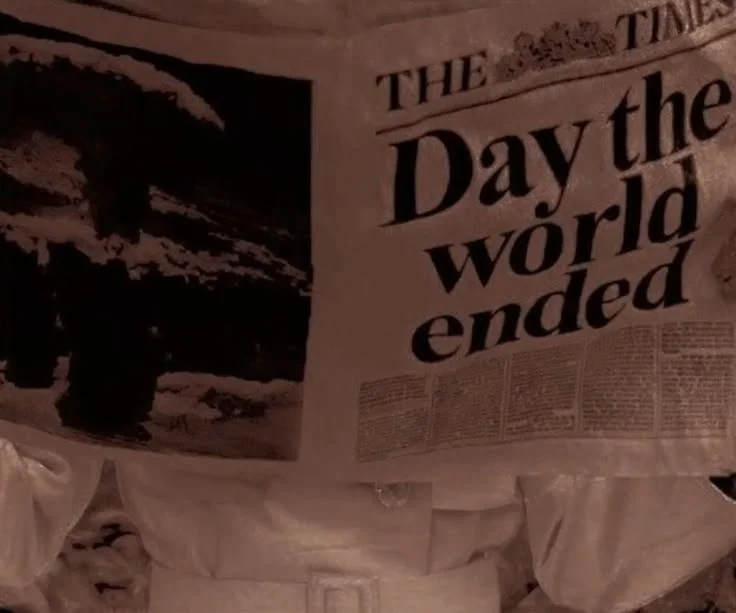
Since modern media was created, there have been numerous works of films, books and documentaries catering to the supposed 'end of the world'. 'Robot Monster' credited 1953, The Last Man on Earth [1964], the Andromeda Strain [1971]. There were purely religious/action themed films like The Rapture [1991], The Prophecy 1 [1995] & 2 [1998]; End of Days [1999]. Does In the Mouth of Madness count as religious? Psychosis, maybe, but I'm gonna put it on the list. For the Gen X'rs, it's 28 Days Later [2002], Reign of Fire [2002], a string of Matrix [1999] films, The Hitch-Hiker's Guide to the Galaxy [2005], I am Legend[2007]…what else am I missing?
Investigating the “Apocalypse”
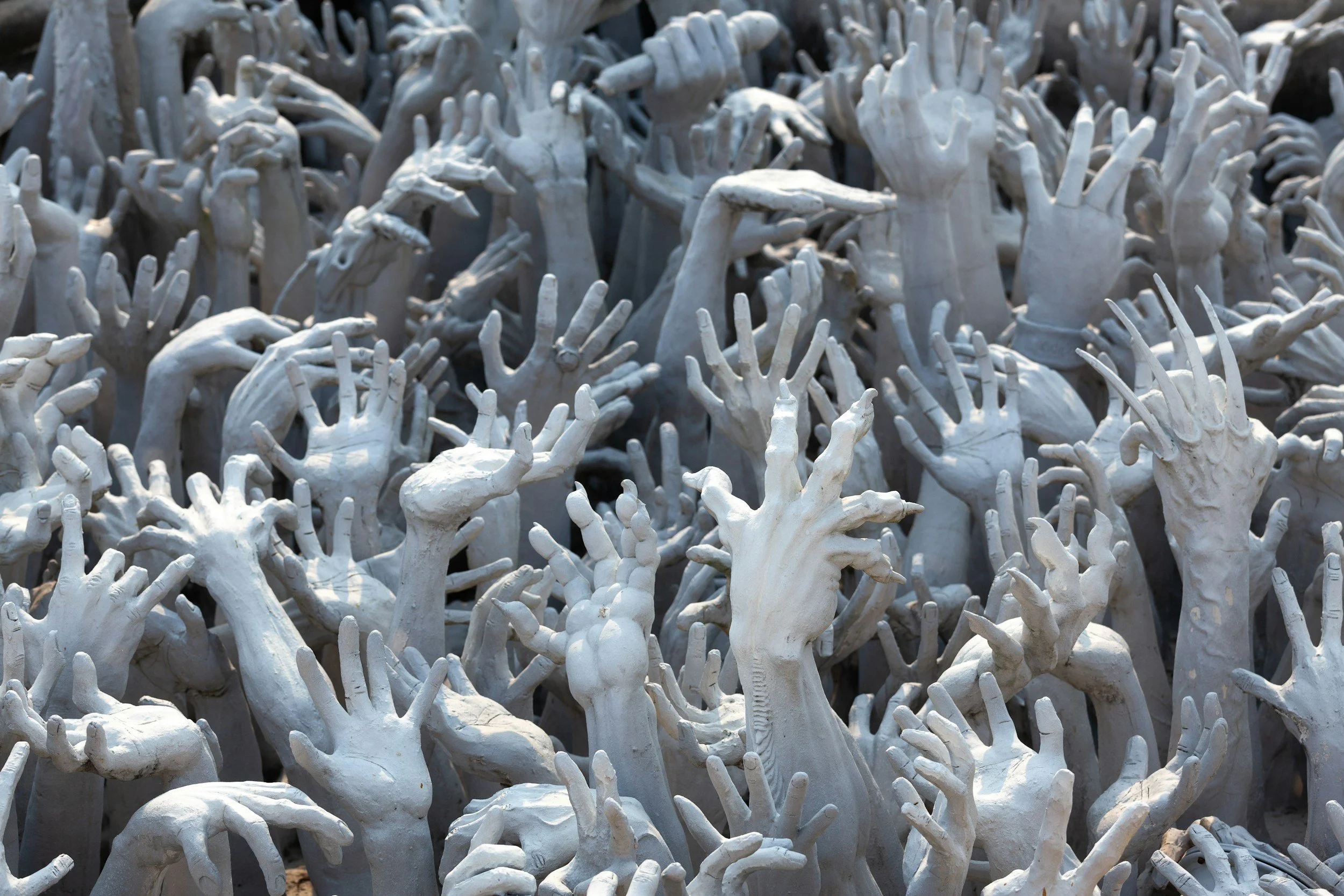
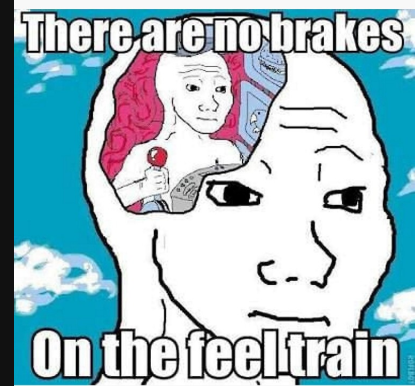
Oh, right. It's the mind-breaking scenes that seem so far off from our reality and yet so entertaining to watch. Because of course, these things couldn't possibly occur, right? Most of these themes and scores originate from The Bible. And the earliest record of 'apocalyptic literature', from the Greek word 'revelation', is from the book of Enoch. The 'revelation' is that one day, the end of the world will occur. Humanity will be judged; half of us will be chosen for prosperity, while the other half…..you get my point. Christian doctrine explains that the Bible is the 'perfect' literary work as it was explained through the prophets the very word of God. But throughout the many religions and mythologies out there, there have always been 'prophets' foretelling a destructive doom planned for humanity and the world. The narrative has yet to die out. Bognna M. Konior writes on pg.47'' of Apocalypse Memes for the Anthropocene God: Mediating Crisis and the Memetic Body Politic Chapter ''In Divine Destruction, journalist Stephanie Hendricks studies contemporary Christian Dominionists, who believe that climate change should not be stalled but accelerated in order to bring about the Second Coming of Jesus and the beginning of God’s Kingdom on Earth[.6 No breaks on the planetary train!] Physicist Stephen Hawking and engineer Elon Musk present us with an atheist version of the Final Judgment, warning that accelerated technological progress will bring about an artificial intelligence singularity and a de-facto end of the human species once the AI realizes how immoral or inefficient humans are.”
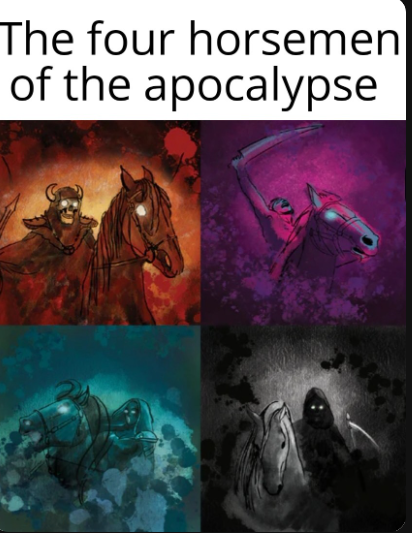
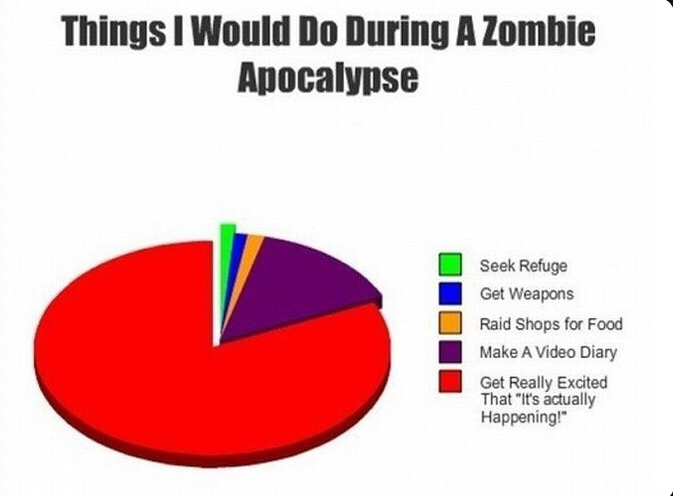
With so much media surrounding a 'Judgement Day' came comedic jokes and alike thoughts on what could or supposedly happen. And with the internet, it only exasperated it with a surge of meme-culture. Categorized as 'units of digital culture with substantial cultural and now also political capital gained through circulation—feeds on various strains of apocalypticism.9', the total influx throughout various social media platforms like X, Instagram, Threads and so-on, have ranged from social to political and economic. Alarm bells have rung as presently, subjects like critical thinking, economics, Presidential leadership, housing, environmental changes, AI, and more, have demonstrated the effects for a terrible future. And the memes keep coming oh they keep coming.
Social Media and Memes
There are many reality shows with ordinary people at the forefront, hoping to show other ordinary people the tips, preparation, self-defense, disaster scenarios, reviews and advertisement. Fat Guys in the Woods, Naked & Afraid, Doomsday Preppers, Prepper Hillbillies, etc. Revamping the regular guy where, as soon as disaster strikes, becomes ‘the hero he was always meant to be.’ And society, through capitalism and commercial media has only amplified that. Cynthia Belmont and Angela Stroud writes in Apocalyptic Masculinity and Disaster Consumerism in Offgrid Magazine “There is a long prepping history in the United States, dating back at least to the fallout shelter craze of the 1950s and 1960s; what distinguishes the current manifestation is that threats are conceived as coming not only from an external, foreign enemy but from any and every direction, including natural disasters, political unrest, accidents, and the actions. Thus, disaster consumerism is an extension of what Ulrich Beck terms a “risk society,” one “that is increasingly occupied with debating, preventing and managing risks that it itself has produced.”
Where these shows sell survival as an answer, memes on the other hand offer a different coping tool: laughing at the collapse of society instead of possibly preparing for it. So why does this work? Why does a doom-filled future make such good content? Part of it is gallows humor, the old human habit of joking about the darkest things so they feel a little lighter. Memes just gave that habit a faster delivery system. You can see it in the big moments. When academics who studied the Mesoamerican Mayan Calendar in the 60’s guessed its interpretation wrong, it was taken as fact without regarding or properly conversing with actual Mayan scholars, who did pushback. The Long Calendar ended on it’s thirteen cycle, which coincidentally fell on December 21, 2012. This unfortunately leaked into popular culture, where it became an internet sensation, filled with memes, brand deals, a $791 million dollar disaster film…..that quickly became a joke once the next day started and the world didn’t end.
Doom-Scrolling
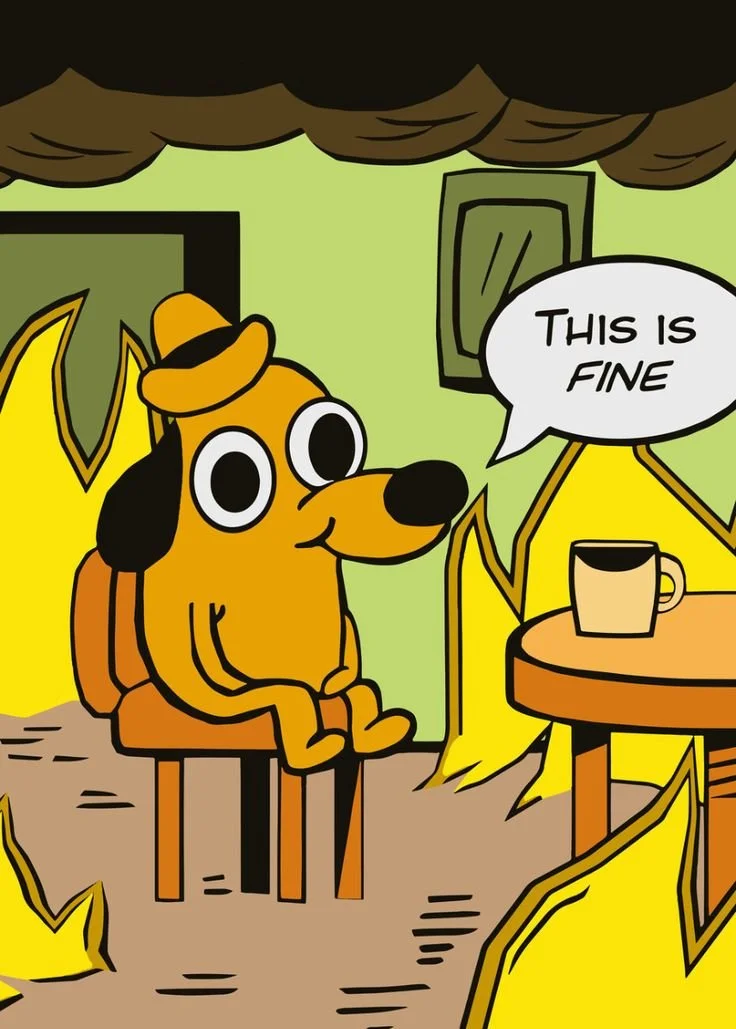
And then there’s “doom-scrolling,” a word we invented because we couldn’t stop reading bad news. After the pandemic, social media was the only way people could stay informed and in the loop. And as people from round the world, Americans specifically, are finding as they scroll through their accounts, horror and doom-fare. They feel they have to watch, as if it’s their obligation to be as informed as possible. And in this modern age, ‘staying informed’ can quickly become an addiction. Says Karen K. Ho, a global finance and economics reporter at the news outlet Quartz from the Scientific American Mind, "There is the very nature of the design of these applications. It’s the slot machine effect: The old way was, you would find something really funny, educational or informative, and the surprise was not knowing when that moment of dopamine or delight would hit you. Then there’s the compulsion for many people to be better informed about the chaotic situation that many of us are currently in as a result of the pandemic, the uncertainty regarding the economic recession, as well as the social justice situation affecting many minorities, women and vulnerable groups in the United States and around the world. Then I think, finally, it’s a very limited act of agency that people still have. You and I can’t go to our favorite restaurants, entertainment venues, gyms; we can’t interact with friends and loved ones due to physical distancing measures. People can’t do a lot of other normal behaviors, so they’re able to exercise their agency in this limited way, even if it’s detrimental to their ability to get a good night’s sleep or reduce their stress.”
Look….we all do it at times. It’s just important to remember what to do when we fall into that pesky cycle. It’s funny, but I’m reminded of that meme where every year is supposed to be better, and it ends up surpassing it as the worst year. Personally, it was going back to creating. All of the hobbies I had abandoned in my quest to ‘be an adult’, I picked up again. For me, writing is my bread and butter. But other things, like making specific spreadsheets about what books I’m reading, creating website templates, starting up calligraphy, listening to podcasts, and making music playlists. These are all things that helped get me out of the spiral. What are some that helped get you out?
Questions?
Notice what’s different from the survival shows. Naked and Afraid and Fat Guys in the Woods say the apocalypse is coming, so get ready. Memes say the apocalypse is coming, so... share this. One offers a plan. The other offers company. And that might be the point. A meme doesn’t fix the housing market or slow down climate change. But it tells you somebody else is anxious too. The question is whether the laughing is a release valve or a distraction. Is it helping us face the end, or helping us look away from it?